One year from today and for only the second time in history, the Filipinas will once again stand among the world’s best at the FIFA Women’s World Cup Brazil 2027.
The Filipinas secured their place at FIFA Women’s World Cup Brazil 2027 by defeating Uzbekistan during the AFC Women’s Asian Cup 2026, proving that their first appearance on the global stage was not a fluke.
But qualification is only the beginning. The question now is how the team will prepare for the biggest tournament in women’s football. The last time the Filipinas qualified for a World Cup, preparations began almost immediately. Between April 2022 and May 2023, the team played 34 official matches before entering their final pre-tournament camp in Sydney.
The numbers tell part of the story:
- 34 official matches played
- 21 wins
- 2 draws
- 11 losses
- 114 goals scored
- 30 goals conceded

More important than the results was the experience gained. Those matches helped the Filipinas build chemistry, establish a tactical identity, integrate new players, and adapt to different styles of football. They learned how to navigate tournament football, quick turnarounds, and the pressure that comes with high-stakes international competition.

The payoff came on July 25, 2023.
The Filipinas defeated co-host New Zealand 1-0 in Wellington, securing the country’s first-ever FIFA Women’s World Cup victory and one of the greatest moments in Philippine football history. Nearly four years later, the Filipinas find themselves in a familiar position: qualified for a World Cup and with one year to prepare for it.

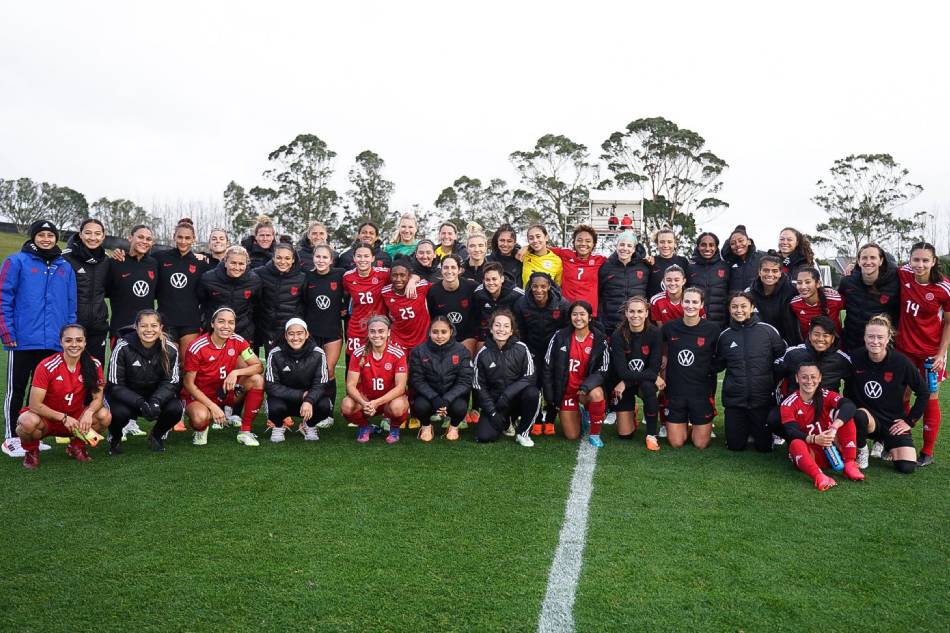
Following qualification for Brazil 2027, it was announced that rest and recovery would be prioritized during the next FIFA international window. While understandable after a demanding Asian Cup campaign, it also meant one less opportunity to build momentum and evaluate the player pool. During the most recent FIFA window, the Filipinas held a training camp in California, playing matches against San Diego Wave and Albion San Diego.
Training camps and club friendlies remain important. They help maintain fitness, reinforce tactical concepts, and strengthen team chemistry. But they are not the same as official international matches.
A year before the World Cup, every FIFA window matters. Every opportunity to face national teams from different confederations matters. Every chance to test systems, evaluate players, and measure progress against international opposition matters. The preparation cycle leading into Australia and New Zealand 2023 showed what a comprehensive World Cup build-up can look like.
.With one year remaining until Brazil 2027, the hard part is no longer qualifying. It’s ensuring the team arrives fully prepared. The 2023 World Cup campaign showed what that looks like: 34 matches, multiple tournaments, overseas camps, and opportunities to test themselves against opponents from different confederations and different levels of competition.
The results in Brazil will not be decided when the tournament kicks off. They will be shaped by every decision made between now and then. Every FIFA window. Every training camp. Every international match that is played, or not played.
The clock is already ticking.